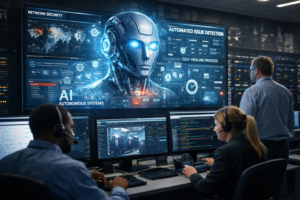
What is the Impact of A.I in I.T Industry
Artificial Intelligence is set to redefine the future of the IT industry by transforming how organizations manage operations, data, and innovation. As AI evolves from supportive tools into autonomous agents, IT systems will increasingly rely on intelligent automation to handle complex workflows, predictive maintenance, and real-time problem resolution. This shift means IT departments will move away from reactive troubleshooting toward proactive, AI-driven resilience, where systems can self-diagnose and self-heal without human intervention. Multimodal AI models, capable of analyzing text, images, logs, and voice data simultaneously, will enable deeper insights into cybersecurity threats, infrastructure performance, and customer interactions, making IT more adaptive and responsive. Moreover, AI will become embedded into the very architecture of IT infrastructure, not just as an add-on feature but as a core operational layer, ensuring scalability and efficiency. However, this transformation also brings challenges, including regulatory compliance, ethical governance, and workforce adaptation, as traditional roles evolve to focus more on collaboration with AI systems rather than manual execution. The future IT landscape will be characterized by leaner teams empowered by AI, faster innovation cycles, and enhanced security frameworks designed to safeguard against AI-driven vulnerabilities. Organizations that invest early in data readiness, governance, and workforce upskilling will gain a competitive edge, while those that lag risk being overwhelmed by technical debt and inefficiency. Ultimately, AI in IT is not just about automation—it is about creating intelligent ecosystems that continuously learn, adapt, and optimize, paving the way for a more resilient, efficient, and innovative digital future.